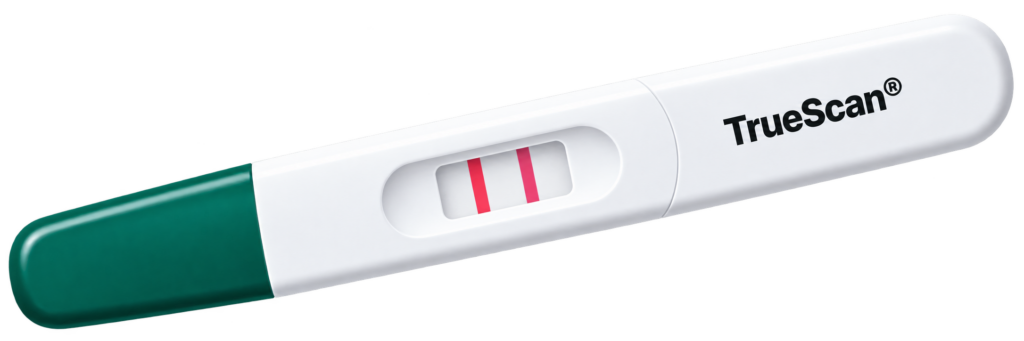
TrueScan

Why High Sensitivity

Subhead

A lower number on the pack can mean an earlier answer for you.

What “Sensitivity” Actually Means

Every pregnancy test pack has a number on it, written in mIU/mL —milli-international units per millilitre. It’s the smallest amount of hCG(human chorionic gonadotropin, the pregnancy hormone) the test canreliably detect in your urine.The lower that number, the more sensitive the test — and the earlier itcan pick up hCG while levels are still rising.
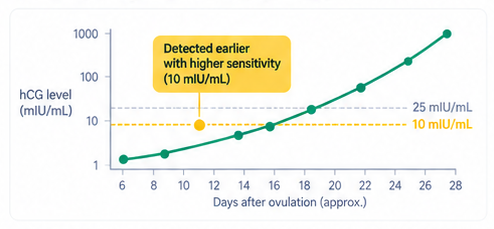
Why This Matters Biologically

After implantation, your body starts producing hCG, and in a typicalearly pregnancy that hormone roughly doubles every 48 to 72 hoursduring the first 6 to 8 weeks. A more sensitive test can catch that risewhile the level is still low, instead of waiting for it to climb further.
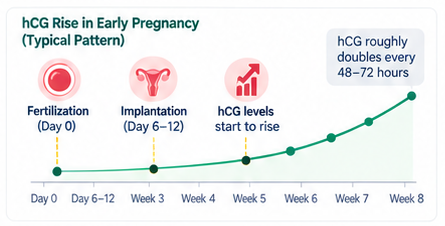
Typical Detection Thresholds

Different tests are designed to detect different level of HCG.Here are general  comparsion used in clinical practice

Test Type
Typical Detection Threshold
What It Means
High-sensitivity
home urine test
10–25 mIU/mL
Can detect lower levels of hCG, potentially earlier.
Standard home
urine test
25–50 mIU/mL
May detect hCG a few days later than high-sensitivity tests.
Quantitative blood
(serum) test
1–2 mIU/mL
Most sensitive method, used in clinical labs.

Where TrueScan Fits

TrueScan offers high-sensitivity pregnancy tests designed for early and reliable detection, so you can move forward with confidence.

TrueScan Easy

10 mlU/mL hCG detection

TrueScan Cassette

Even Below 20 mIU/mL hCG detection

Sensitivity Isn’t the Whole Story

Timing

Testing too early, before hCG has risen, is the single most common cause of a false negative.

Urine concentration

First-morning urine has the highest hCG concentration of the day

Reading window

Reading too early can miss a developing line,reading too late can show an evaporation line. TrueScan results should be read after 7 and before 15 minutes.